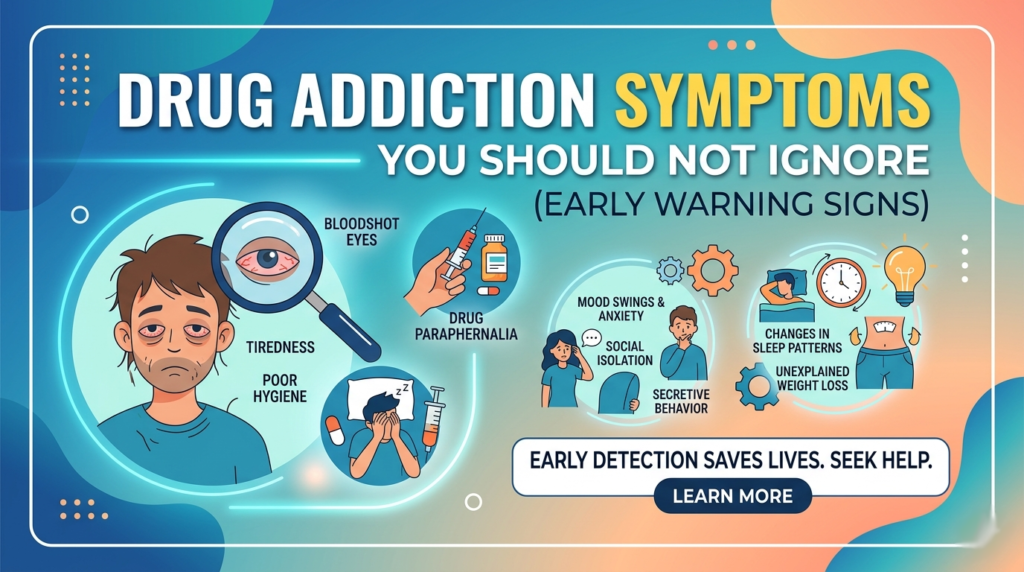
Drug addiction doesn’t usually begin overnight. It develops gradually, often starting with occasional or experimental use that slowly turns into dependency. Unfortunately, many early warning signs go unnoticed or are ignored until the situation becomes severe. Recognizing these symptoms at an early stage can make a significant difference in recovery and long-term health outcomes.
This guide will help you understand the early signs of drug addiction, how they affect behavior, health, and relationships, and why timely intervention is crucial.
What Is Drug Addiction?
Drug addiction, also known as substance use disorder, is a condition where a person becomes physically or psychologically dependent on a substance. It affects brain function, behavior, and decision-making abilities. Over time, the person feels a strong urge to continue using drugs despite harmful consequences.
Early detection is key because the longer addiction continues, the more difficult it becomes to treat.
Why Early Signs Are Often Ignored
Many people overlook early symptoms of drug addiction due to:
- Denial by the individual or family
- Misinterpreting symptoms as stress or mood swings
- Lack of awareness about addiction signs
- Social stigma and fear of judgment
However, ignoring these signs can lead to serious health, financial, and emotional problems.
Early Warning Signs of Drug Addiction
1. Sudden Behavioral Changes
One of the earliest indicators is a noticeable shift in behavior. A person who was once responsible and engaged may start acting differently.
Common signs include:
- Becoming secretive or defensive
- Losing interest in hobbies or activities
- Frequent mood swings
- Irritability or aggression
These changes often occur because drugs begin to alter brain chemistry.
2. Social Withdrawal and Isolation
People struggling with drug use often distance themselves from family and friends.
Look for:
- Avoiding social gatherings
- Spending more time alone
- Changing friend circles suddenly
- Preferring company of people who use substances
Isolation makes it easier for addiction to grow unnoticed.
3. Neglecting Responsibilities
A clear red flag is when someone starts ignoring their daily responsibilities.
Examples include:
- Poor performance at work or school
- Missing deadlines or skipping classes
- Lack of interest in personal or professional goals
This happens because drug use becomes a priority over everything else.
4. Physical Health Changes
Drug addiction often causes visible physical symptoms.
Early signs may include:
- Sudden weight loss or gain
- Red or bloodshot eyes
- Frequent nosebleeds (common with certain drugs)
- Unusual body odors
- Lack of personal hygiene
These symptoms vary depending on the substance being used.
5. Changes in Sleep Patterns
Sleep disturbances are a common early symptom.
Watch for:
- Insomnia or difficulty sleeping
- Sleeping too much or at unusual times
- Irregular sleep schedules
Drugs can disrupt the body’s natural sleep cycle.
6. Financial Problems
Addiction can quickly become expensive, leading to financial stress.
Signs include:
- Frequently asking for money
- Unexplained expenses
- Selling personal belongings
- Stealing money
Financial instability often worsens as addiction progresses.
7. Loss of Control Over Drug Use
An important warning sign is the inability to control usage.
Indicators:
- Using more drugs than intended
- Failed attempts to quit
- Strong cravings or urges
This is often the point where casual use turns into dependency.
8. Risky or Dangerous Behavior
Drug use can impair judgment, leading to risky decisions.
Examples:
- Driving under the influence
- Engaging in unsafe activities
- Legal troubles or arrests
Such behaviors not only harm the individual but also others around them.
9. Emotional and Psychological Changes
Addiction significantly impacts mental health.
Common symptoms:
- Anxiety or depression
- Paranoia
- Lack of motivation
- Sudden emotional outbursts
These issues often worsen if left untreated.
10. Tolerance and Withdrawal Symptoms
As addiction develops, the body builds tolerance.
Signs of tolerance:
- Needing more of the drug to feel the same effect
Withdrawal symptoms include:
- Sweating
- Nausea
- Shaking
- Irritability
- Restlessness
These symptoms indicate physical dependence on the substance.
Also Read : How Cognitive Behavioral Therapy (CBT) Helps You Overcome Anxiety Naturally
Impact of Ignoring Early Symptoms
Ignoring early warning signs can lead to serious consequences:
1. Health Complications
Long-term drug use can damage vital organs, weaken the immune system, and increase the risk of chronic diseases.
2. Mental Health Disorders
Untreated addiction often leads to depression, anxiety, and even suicidal thoughts.
3. Relationship Breakdown
Trust issues, conflicts, and emotional distance can damage relationships with family and friends.
4. Legal and Financial Issues
Addiction may lead to criminal activities, job loss, and severe financial problems.
When Should You Seek Help?
You should consider seeking professional help if:
- Drug use is becoming frequent
- Behavioral and physical changes are noticeable
- The person is unable to stop despite trying
- Daily life is being affected
Early intervention can prevent addiction from becoming severe and improve recovery outcomes.
How Early Treatment Helps
Getting help at the early stage offers several benefits:
- Faster recovery process
- Lower risk of severe health complications
- Better mental health outcomes
- Improved relationships and social life
Treatment may include detoxification, counseling, therapy, and support groups.
Role of Family in Identifying Symptoms
Family members often notice changes first. Their role is crucial in early detection and support.
What families can do:
- Stay observant and aware
- Communicate openly without judgment
- Encourage seeking professional help
- Avoid enabling harmful behavior
Support from loved ones can make recovery easier and more effective.
Tips to Prevent Drug Addiction
Prevention is always better than cure. Here are some simple steps:
- Educate yourself and others about drug risks
- Avoid peer pressure and risky environments
- Develop healthy coping mechanisms for stress
- Seek help for mental health issues early
- Build strong support systems
Breaking the Stigma Around Addiction
One of the biggest barriers to treatment is social stigma. Many people avoid seeking help due to fear of judgment.
It’s important to understand that addiction is a medical condition, not a moral failure. Encouraging open conversations and awareness can help more people come forward and seek treatment.
Conclusion
Drug addiction can affect anyone, regardless of age, background, or lifestyle. The key to preventing severe consequences lies in recognizing early warning signs and taking timely action.
If you or someone you know is showing symptoms of drug addiction, don’t ignore them. Early support and professional treatment can make recovery easier and more successful.
Frequently Asked Questions (FAQs)
1. What are the first signs of drug addiction?
Early signs include behavioral changes, mood swings, social withdrawal, and neglecting responsibilities. Physical symptoms like weight changes and sleep issues may also appear.
2. How can I tell if someone is addicted to drugs?
Look for a combination of signs such as secrecy, financial problems, changes in friends, poor performance at work or school, and loss of control over drug use.
3. Can drug addiction be treated in early stages?
Yes, early-stage addiction is often easier to treat and may require less intensive intervention compared to advanced stages.
4. What should I do if a family member shows symptoms?
Approach them calmly, express concern without judgment, and encourage them to seek professional help.
5. Are withdrawal symptoms dangerous?
Withdrawal symptoms can range from mild to severe. In some cases, they can be life-threatening, so medical supervision is recommended.
6. How does drug addiction affect mental health?
It can lead to anxiety, depression, paranoia, and other psychological disorders.
7. Is occasional drug use a sign of addiction?
Not necessarily, but it can lead to addiction over time. Regular monitoring and awareness are important.
8. How long does it take to develop addiction?
It varies depending on the person and substance. Some drugs can lead to addiction quickly, while others take longer.
9. Can someone recover completely from drug addiction?
Yes, with proper treatment, therapy, and support, many people recover and lead healthy lives.
10. Why do people hide their addiction?
Fear of judgment, denial, and social stigma often cause people to hide their addiction.