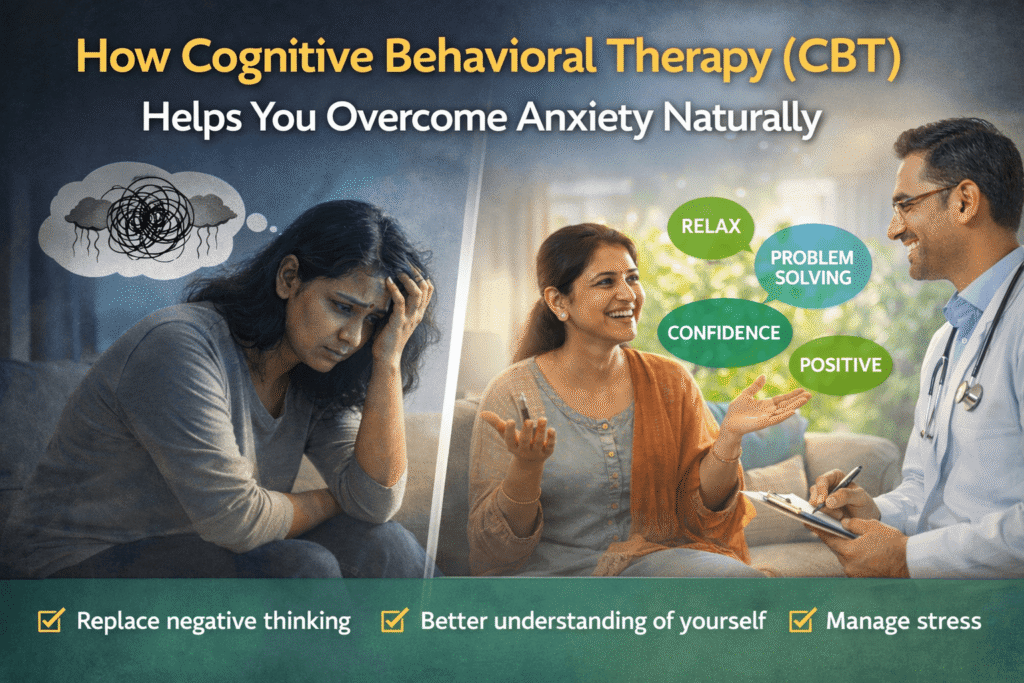
Anxiety is one of the most common mental health challenges people face today. In a fast-paced world filled with pressure, uncertainty, responsibilities, and emotional stress, many individuals experience persistent worry, fear, nervousness, and mental exhaustion. While occasional anxiety is a normal part of life, chronic anxiety can interfere with your daily routine, relationships, sleep, productivity, and overall well-being.
Fortunately, anxiety is treatable, and one of the most effective and evidence-based treatments available is Cognitive Behavioral Therapy (CBT). CBT is a structured, practical, and goal-oriented form of therapy that helps people understand the connection between their thoughts, feelings, and behaviors. It teaches individuals how to challenge negative thinking patterns and replace them with healthier, more balanced responses.
In this article, we will explore what CBT is, how it works for anxiety, why it is so effective, and how it can help people regain control over their thoughts and emotions.
What Is Anxiety?
Anxiety is more than just feeling stressed or worried. It is a mental and physical response to fear, uncertainty, or perceived danger. When anxiety becomes excessive, it can make even ordinary situations feel overwhelming.
People with anxiety often experience a constant sense of unease or fear, even when there is no immediate threat. This can affect their emotional health, physical health, and ability to function normally.
Common Symptoms of Anxiety
Some of the most common signs of anxiety include:
- Constant worrying or overthinking
- Restlessness or feeling “on edge”
- Rapid heartbeat or chest tightness
- Sweating or trembling
- Trouble sleeping
- Difficulty concentrating
- Fear of losing control
- Avoiding social or stressful situations
- Muscle tension
- Feeling mentally exhausted
When these symptoms start affecting daily life, professional support becomes important—and this is where CBT can make a major difference.
What Is Cognitive Behavioral Therapy (CBT)?
Cognitive Behavioral Therapy (CBT) is a widely used form of psychotherapy that focuses on how thoughts, emotions, and behaviors are connected. The main idea behind CBT is simple:
The way you think affects the way you feel and behave.
If a person constantly thinks in a negative, fearful, or distorted way, it can create anxiety, emotional distress, and unhealthy behaviors. CBT helps identify those patterns and teaches healthier ways to respond.
A Simple Example
Imagine someone has to speak in front of a group. Their automatic thought may be:
“I’m going to embarrass myself.”
This thought may create feelings of:
- Fear
- Panic
- Self-doubt
Which may lead to behaviors like:
- Avoiding the presentation
- Procrastinating
- Feeling physically sick before speaking
CBT helps the person challenge this thought and replace it with something more realistic, such as:
“I may feel nervous, but I can still do this.”
This small mental shift can have a powerful impact on anxiety.
Why CBT Is Considered One of the Best Treatments for Anxiety
CBT is considered one of the most effective treatments for anxiety because it addresses the root patterns that keep anxiety going. Instead of only focusing on symptoms, CBT helps individuals understand:
- Why they feel anxious
- What triggers their anxiety
- How their thoughts make anxiety worse
- How avoidance and fear reinforce the problem
It is not just about “talking” about your problems—it is about learning practical skills that can improve your life.
CBT Helps You:
- Identify anxious thought patterns
- Challenge irrational fears
- Build emotional resilience
- Reduce panic and overthinking
- Face fears gradually and safely
- Develop healthier coping strategies
Because of its structured and results-driven approach, CBT is often recommended by psychologists, therapists, and mental health professionals worldwide.
How CBT Works for Anxiety
CBT usually follows a step-by-step process. It is collaborative, meaning the therapist and client work together to understand the anxiety and build tools for recovery.
1. Identifying Negative Thought Patterns
One of the first steps in CBT is learning to recognize the thoughts that trigger anxiety.
People with anxiety often experience automatic negative thoughts, such as:
- “Something bad is going to happen.”
- “I won’t be able to handle this.”
- “People will judge me.”
- “I’m not safe.”
- “I’m going to fail.”
These thoughts often happen so quickly that people believe them without questioning them. CBT helps bring awareness to these thought patterns.
Why This Matters
Once you identify the thought, you gain the power to examine it instead of simply reacting to it.
2. Challenging Unhelpful Thoughts
After identifying anxious thoughts, CBT helps you test whether those thoughts are actually true, realistic, or helpful.
This process is called cognitive restructuring.
A therapist may ask questions like:
- What evidence supports this thought?
- What evidence goes against it?
- Am I assuming the worst-case scenario?
- Is there another possible outcome?
- What would I say to a friend in this situation?
Example
Anxious thought:
“If I make one mistake, everyone will think I’m incompetent.”
Balanced CBT thought:
“Everyone makes mistakes. One small error does not define my ability.”
Over time, this practice helps reduce fear, catastrophizing, and self-criticism.
3. Changing Anxiety-Driven Behaviors
Anxiety doesn’t only affect your thoughts—it also changes your behavior.
Many people with anxiety begin to avoid situations that make them uncomfortable. For example, they may:
- Avoid phone calls
- Skip social events
- Put off important tasks
- Avoid public speaking
- Stay away from unfamiliar places
While avoidance may provide short-term relief, it actually strengthens anxiety over time. CBT helps break this cycle.
Also Read : How to Choose a Reliable De-Addiction Center for Smoking – Complete Guide
How CBT Helps
Therapists help clients identify avoidance patterns and gradually replace them with healthier, more confident actions.
This teaches the brain that feared situations are often manageable—and not as dangerous as they seem.
4. Using Exposure Techniques
One of the most powerful CBT tools for anxiety is gradual exposure.
This means facing fears slowly, safely, and step by step instead of avoiding them.
Example: Social Anxiety
If someone fears social situations, their exposure plan may look like this:
- Make eye contact and smile at someone
- Start a short conversation
- Attend a small gathering
- Speak up in a group setting
- Participate in a larger social event
This process helps retrain the brain and reduce fear over time. Instead of reinforcing avoidance, exposure builds confidence and tolerance.
5. Learning Practical Coping Skills
CBT is not only about changing thoughts—it also teaches practical techniques to manage anxiety in real time.
Common CBT-Based Coping Strategies
These may include:
- Deep breathing exercises
- Grounding techniques
- Journaling
- Thought records
- Relaxation exercises
- Mindfulness practices
- Problem-solving tools
- Positive self-talk
- Stress management skills
These tools help calm the nervous system, reduce emotional intensity, and improve your ability to cope with anxiety triggers.
Types of Anxiety CBT Can Help Treat
CBT is highly effective for many different anxiety-related conditions.
1. Generalized Anxiety Disorder (GAD)
Constant worry about everyday situations, health, family, work, or the future.
2. Panic Disorder
Sudden panic attacks with intense physical symptoms like chest tightness, dizziness, and fear of losing control.
3. Social Anxiety Disorder
Fear of judgment, embarrassment, or rejection in social situations.
4. Health Anxiety
Excessive fear about illness, symptoms, or physical health.
5. Phobias
Irrational fear of specific things such as heights, travel, crowds, darkness, or enclosed spaces.
6. Anxiety During Addiction Recovery
People recovering from alcohol, smoking, or drug addiction often struggle with anxiety. CBT is especially useful in helping them manage cravings, stress, and emotional triggers.
Benefits of CBT for Anxiety
CBT offers long-term benefits because it teaches skills that can be used throughout life—not just during therapy sessions.
Major Benefits of CBT Include:
1. Better Understanding of Triggers
You learn what causes your anxiety and how to respond more effectively.
2. Reduced Overthinking
CBT helps you stop spiraling into worst-case scenarios.
3. Improved Emotional Control
You become better at handling fear, stress, and uncertainty.
4. Increased Self-Confidence
As you face fears and challenge limiting beliefs, confidence naturally improves.
5. Better Relationships and Daily Functioning
When anxiety becomes manageable, communication, focus, and emotional balance improve.
6. Long-Term Relief
CBT gives you tools that continue helping even after therapy ends.
What Happens in a CBT Session?
Many people feel unsure about therapy because they don’t know what to expect. In reality, CBT is usually very structured, supportive, and practical.
A Typical CBT Session May Include:
- Talking about your recent anxiety symptoms
- Identifying stressful situations or triggers
- Exploring automatic thoughts
- Challenging unhelpful beliefs
- Learning a new coping strategy
- Practicing exercises or homework for the week
CBT often includes home practice, because progress happens not only in sessions, but also in everyday life.
How Long Does CBT Take to Work?
The timeline varies from person to person. Some people notice improvement within a few sessions, while others may need more time depending on the severity of their anxiety.
Factors That Affect Progress:
- Type and intensity of anxiety
- Willingness to practice CBT techniques
- Frequency of sessions
- Presence of trauma, addiction, or depression
- Support system and lifestyle habits
CBT is not a “quick fix,” but it is one of the most effective long-term strategies for managing anxiety.
Can CBT Be Used Without Medication?
Yes, many people benefit from CBT without taking medication. For mild to moderate anxiety, CBT alone can be highly effective.
However, in some cases—especially when anxiety is severe or causing panic attacks, insomnia, or major disruption—a doctor or psychiatrist may recommend medication along with therapy.
CBT Works Best When Combined With Healthy Habits
Lifestyle changes can significantly improve anxiety management, such as:
- Getting enough sleep
- Exercising regularly
- Limiting caffeine
- Eating balanced meals
- Reducing screen time
- Practicing relaxation techniques
- Avoiding alcohol or substance misuse
Why Anxiety Should Not Be Ignored
Many people dismiss anxiety as “just stress” and continue suffering in silence. But untreated anxiety can grow worse over time and lead to serious consequences.
Untreated Anxiety Can Contribute To:
- Depression
- Sleep disorders
- Social isolation
- Burnout
- Panic attacks
- Low self-esteem
- Addiction or unhealthy coping habits
- Reduced quality of life
Seeking help early can prevent anxiety from becoming more severe and difficult to manage.
When Should You Consider CBT for Anxiety?
You should consider CBT if:
- You worry excessively every day
- You avoid situations because of fear
- Your anxiety affects your sleep or focus
- You experience panic symptoms
- You struggle with constant overthinking
- Stress is interfering with your work or relationships
- You feel emotionally overwhelmed often
The earlier you seek support, the easier it is to build healthy coping skills and improve your mental well-being.
Conclusion
Anxiety is real, common, and treatable. You do not have to live in constant fear, overthinking, or emotional exhaustion. Cognitive Behavioral Therapy (CBT) is one of the most trusted and effective approaches for anxiety because it helps people understand their thoughts, manage their emotions, and change the behaviors that keep anxiety alive.
CBT is practical, empowering, and proven to work. It gives individuals the tools they need not only to reduce anxiety—but to build a healthier, calmer, and more confident life.
If you or a loved one is struggling with anxiety, seeking professional help can be a life-changing step toward healing and emotional recovery.
Frequently Asked Questions (FAQs)
1. What is CBT for anxiety?
CBT, or Cognitive Behavioral Therapy, is a structured form of therapy that helps individuals identify and change negative thought patterns and behaviors that contribute to anxiety.
2. Is CBT effective for anxiety disorders?
Yes, CBT is considered one of the most effective and evidence-based treatments for anxiety disorders, including generalized anxiety, panic disorder, and social anxiety.
3. How does CBT help with overthinking?
CBT helps people recognize unhelpful thoughts, challenge irrational fears, and replace them with more balanced and realistic thinking.
4. How many CBT sessions are needed for anxiety?
The number of sessions varies depending on the person and the severity of anxiety. Some people improve in a few weeks, while others may need longer-term support.
5. Can CBT help with panic attacks?
Yes, CBT is highly effective in helping people understand panic attacks, reduce fear of symptoms, and learn coping techniques to manage them.
6. Is CBT better than medication for anxiety?
CBT can be highly effective on its own, especially for mild to moderate anxiety. In severe cases, therapy and medication may be used together for better results.
7. Can CBT help social anxiety?
Absolutely. CBT is one of the best treatments for social anxiety because it helps challenge fear of judgment and gradually reduce avoidance behaviors.
8. Does CBT work for anxiety during addiction recovery?
Yes, CBT is very helpful for individuals recovering from substance use, alcohol dependence, or smoking addiction, especially when anxiety is part of the recovery process.
9. Is CBT suitable for teenagers and adults?
Yes, CBT can be adapted for different age groups and is effective for teenagers, adults, and even older adults.
10. When should I seek therapy for anxiety?
You should seek therapy if anxiety is affecting your sleep, work, health, daily functioning, or relationships, or if you feel overwhelmed regularly.