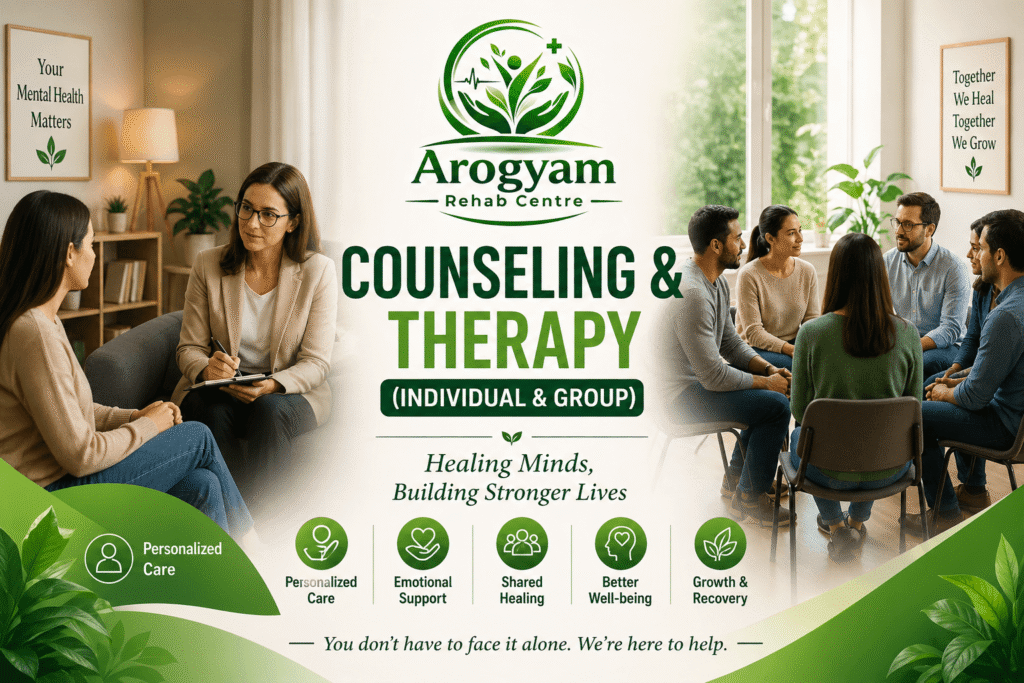
Counseling and therapy play a vital role in helping individuals overcome emotional struggles, mental health challenges, and addiction. Whether someone is dealing with stress, anxiety, trauma, or substance abuse, professional support can provide the structure, guidance, and tools needed to rebuild a healthier life.
Both individual therapy and group therapy are widely used approaches in rehabilitation centers, mental health clinics, and wellness programs. While each method has its own benefits, combining them often leads to deeper healing and long-term recovery.
This comprehensive guide explains how counseling and therapy work, their types, benefits, and why they are essential for personal transformation.
What is Counseling and Therapy?
Counseling and therapy are professional processes where trained experts help individuals understand their thoughts, emotions, and behaviors. The goal is to improve mental well-being, resolve personal issues, and develop coping strategies.
While often used interchangeably, there is a subtle difference:
- Counseling: Focuses on specific issues (stress, relationships, addiction triggers)
- Therapy (Psychotherapy): Goes deeper into long-term emotional patterns and mental health conditions
Both are essential for holistic recovery.
Importance of Counseling in Recovery and Mental Health
Many people try to deal with their problems alone, but unresolved emotions can lead to serious issues like depression, anxiety, or addiction. Counseling provides:
- A safe and confidential environment
- Emotional support without judgment
- Professional guidance for decision-making
- Tools to manage stress and cravings
- Better self-awareness and confidence
In addiction recovery, counseling helps identify the root cause of substance use and prevents relapse.
Individual Therapy: One-on-One Healing
What is Individual Therapy?
Individual therapy is a private session between a client and a therapist. It allows deep personal exploration and customized treatment.
Key Benefits of Individual Therapy
1. Personalized Attention
Therapists tailor sessions based on the individual’s needs, history, and challenges.
2. Safe Space for Expression
Clients can openly discuss personal issues without fear of judgment.
3. Root Cause Identification
Helps uncover underlying reasons behind addiction, trauma, or emotional pain.
4. Emotional Regulation
Teaches techniques to manage anger, anxiety, and negative thoughts.
5. Goal-Oriented Progress
Focuses on specific goals like quitting substance use, improving relationships, or building self-esteem.
Common Techniques Used in Individual Therapy
Cognitive Behavioral Therapy (CBT)
Helps identify and change negative thought patterns and behaviors.
Motivational Enhancement Therapy (MET)
Encourages individuals to build motivation for positive change.
Dialectical Behavior Therapy (DBT)
Focuses on emotional control and mindfulness.
Trauma-Informed Therapy
Addresses past trauma in a safe and structured way.
Group Therapy: Healing Through Connection
What is Group Therapy?
Group therapy involves multiple individuals sharing their experiences under the guidance of a therapist. It creates a supportive community where participants learn from each other.
Key Benefits of Group Therapy
1. Emotional Support
Participants realize they are not alone in their struggles.
2. Shared Experiences
Listening to others helps gain new perspectives and insights.
3. Accountability
Group members motivate each other to stay committed to recovery.
4. Social Skill Development
Improves communication, empathy, and relationship-building skills.
5. Cost-Effective Treatment
Often more affordable than individual sessions.
Types of Group Therapy
Psychoeducational Groups
Focus on educating members about mental health and addiction.
Support Groups
Provide emotional encouragement and shared healing.
Skill Development Groups
Teach coping strategies, stress management, and relapse prevention.
Process-Oriented Groups
Encourage deep discussions about emotions and personal experiences.
Individual vs Group Therapy: Which is Better?
Both therapies are effective, but they serve different purposes:
| Aspect | Individual Therapy | Group Therapy |
|---|---|---|
| Focus | Personal issues | Shared experiences |
| Privacy | High | Moderate |
| Interaction | One-on-one | Multiple participants |
| Learning | Self-focused | Peer learning |
| Support | Therapist-driven | Community-driven |
Best Approach: A combination of both provides maximum benefits.
Role of Counseling in Addiction Recovery
Addiction is not just physical dependence; it is deeply connected to emotional and psychological factors. Counseling helps:
- Identify triggers (stress, trauma, peer pressure)
- Develop coping mechanisms
- Manage cravings and urges
- Improve family relationships
- Build a relapse prevention plan
Without counseling, the chances of relapse increase significantly.
Family Counseling: Strengthening Support Systems
Addiction and mental health issues affect not just individuals but their families as well. Family counseling:
- Improves communication
- Resolves conflicts
- Educates family members about addiction
- Builds a supportive home environment
A strong family support system significantly improves recovery outcomes.
Counseling for Mental Health Disorders
Therapy is essential for managing conditions such as:
- Anxiety disorders
- Depression
- Social anxiety
- PTSD (Post-Traumatic Stress Disorder)
- Bipolar disorder
Regular sessions help individuals lead stable and productive lives.
How Counseling Prevents Relapse
Relapse is a common challenge in recovery, but counseling reduces its risk by:
- Teaching trigger management
- Building emotional resilience
- Encouraging healthy routines
- Providing continuous support
- Strengthening decision-making skills
Therapy ensures that recovery is not temporary but long-lasting.
What to Expect in a Counseling Session
For those new to therapy, here’s what usually happens:
- Initial Assessment
Therapist understands your background and challenges - Goal Setting
Clear objectives are defined - Regular Sessions
Weekly or bi-weekly discussions - Progress Evaluation
Tracking improvements and adjusting strategies - Aftercare Support
Continued guidance even after recovery
Signs You May Need Counseling
You should consider therapy if you experience:
- Constant stress or anxiety
- Difficulty controlling emotions
- Substance dependence
- Relationship problems
- Lack of motivation
- Sleep disturbances
- Feelings of loneliness or hopelessness
Seeking help early prevents serious complications.
Online vs Offline Counseling
Online Counseling
- Convenient and flexible
- Accessible from anywhere
- Suitable for mild to moderate issues
Offline Counseling
- Face-to-face interaction
- Better for severe conditions
- Stronger emotional connection
Both options are effective depending on individual needs.
Myths About Counseling and Therapy
Myth 1: Therapy is only for “serious” problems
Reality: Everyone can benefit from counseling.
Myth 2: It shows weakness
Reality: Seeking help shows strength and awareness.
Myth 3: Therapists give direct solutions
Reality: They guide you to find your own solutions.
Myth 4: Group therapy is uncomfortable
Reality: It becomes supportive and empowering over time.
How to Choose the Right Therapist
Selecting the right professional is important for effective therapy:
- Check qualifications and experience
- Look for specialization (addiction, anxiety, trauma)
- Ensure comfort and trust
- Read reviews or testimonials
- Prefer licensed and certified professionals
A good therapist builds a strong connection and understanding.
Long-Term Benefits of Counseling
Consistent therapy leads to:
- Better emotional health
- Improved relationships
- Increased self-confidence
- Reduced stress and anxiety
- Strong coping skills
- Sustainable recovery from addiction
It’s not just treatment—it’s a lifelong investment in mental well-being.
FAQs: Counseling & Therapy (Individual & Group)
1. What is the difference between counseling and therapy?
Counseling focuses on specific short-term issues, while therapy addresses deeper emotional and psychological patterns over time.
2. Which is better: individual or group therapy?
Both are effective. Individual therapy offers personalized attention, while group therapy provides peer support. A combination works best.
3. How long does therapy take?
It depends on the individual’s condition. Some may need a few weeks, while others benefit from long-term therapy.
4. Is counseling necessary for addiction recovery?
Yes, counseling is essential to address emotional triggers and prevent relapse.
5. Can therapy really change behavior?
Yes, therapy helps individuals understand and modify harmful thought patterns and behaviors.
6. Is group therapy safe and confidential?
Yes, therapists ensure a safe and confidential environment, and members are expected to respect privacy.
7. How often should I attend therapy sessions?
Typically once or twice a week, depending on the treatment plan.
8. Can family members be involved in therapy?
Yes, family counseling is often recommended for better recovery outcomes.
9. What if I feel uncomfortable sharing in group therapy?
It’s normal initially. Over time, most people feel more comfortable and supported.
10. Is online counseling effective?
Yes, especially for mild to moderate issues, though severe cases may require in-person sessions.
11. Do therapists judge their clients?
No, therapists provide a non-judgmental and supportive environment.
12. What are the signs that therapy is working?
Improved mood, better coping skills, healthier relationships, and reduced stress are positive signs.
Conclusion
Counseling and therapy—both individual and group—are powerful tools for healing and transformation. They address not just the symptoms but the root causes of emotional struggles and addiction. With the right support system, professional guidance, and commitment, individuals can achieve lasting recovery and a fulfilling life.
If you or someone you know is struggling, seeking counseling is a step toward a healthier, happier future.