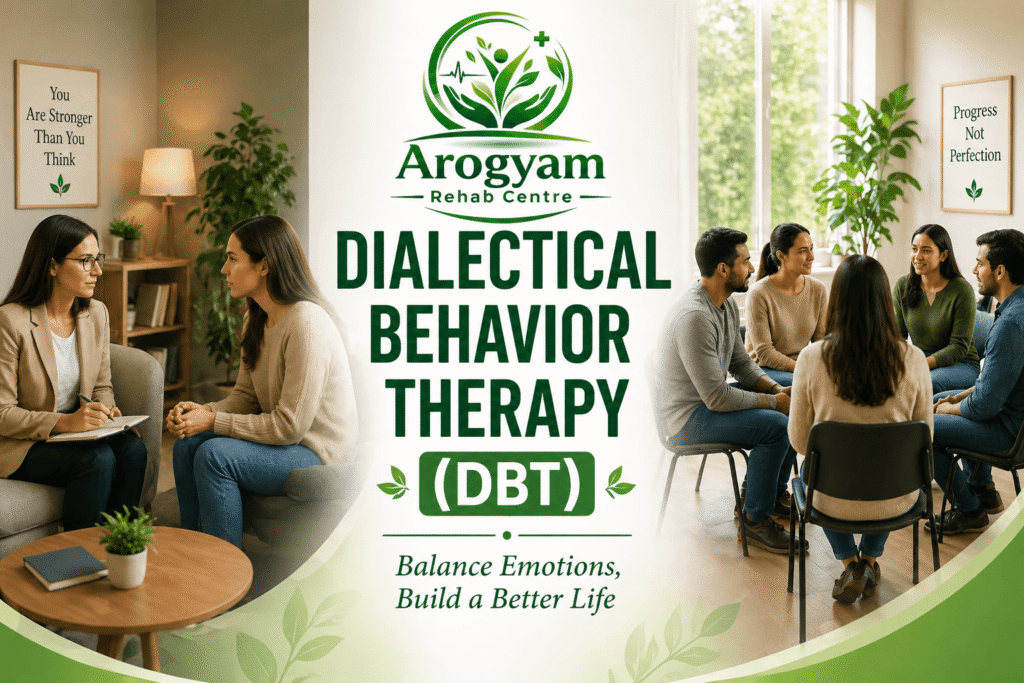
Dialectical Behavior Therapy (DBT) is a powerful, evidence-based form of psychotherapy designed to help individuals manage intense emotions, improve relationships, and build a more stable and fulfilling life. Originally developed to treat individuals with severe emotional dysregulation, DBT is now widely used for a variety of mental health conditions, including anxiety, depression, trauma, and addiction.
In rehabilitation and mental health settings, DBT plays a crucial role in helping individuals regain control over their thoughts, emotions, and behaviors. This comprehensive guide explores what DBT is, how it works, its core components, benefits, and why it is highly effective in both mental health and addiction recovery.
What is Dialectical Behavior Therapy (DBT)?
Dialectical Behavior Therapy is a type of cognitive-behavioral therapy that focuses on balancing two key ideas:
- Acceptance of who you are
- Change to improve your life
The term “dialectical” refers to the integration of opposites—accepting yourself while also working toward positive change.
DBT teaches individuals how to:
- Manage overwhelming emotions
- Cope with stress in healthy ways
- Improve relationships
- Reduce self-destructive behaviors
History and Development of DBT
DBT was developed by psychologist Dr. Marsha Linehan in the late 1980s. It was initially created to treat individuals with borderline personality disorder (BPD), particularly those struggling with self-harm and suicidal thoughts.
Over time, DBT has been adapted for a wide range of conditions, including:
- Substance use disorders
- Depression and anxiety
- PTSD (Post-Traumatic Stress Disorder)
- Eating disorders
Today, it is considered one of the most effective therapies for emotional regulation and behavioral change.
Core Principles of DBT
DBT is built on four key principles that guide therapy:
1. Acceptance and Change
Clients learn to accept their current situation while working toward healthier behaviors.
2. Mindfulness
Staying present in the moment without judgment.
3. Emotional Regulation
Understanding and controlling intense emotions.
4. Behavioral Change
Replacing harmful behaviors with constructive actions.
Just Read : Cognitive Behavioral Therapy: A Complete Guide to Understanding and Benefits
The Four Modules of DBT
DBT is structured into four main skill areas:
1. Mindfulness
Mindfulness is the foundation of DBT. It teaches individuals to focus on the present moment and observe their thoughts without judgment.
Skills include:
- Observing thoughts and feelings
- Describing experiences clearly
- Participating fully in the present moment
Benefits:
- Reduces stress and anxiety
- Improves focus and clarity
- Helps break negative thought cycles
2. Distress Tolerance
This module helps individuals cope with difficult situations without resorting to harmful behaviors.
Skills include:
- Crisis survival strategies
- Self-soothing techniques
- Radical acceptance
Benefits:
- Prevents impulsive reactions
- Builds resilience during emotional pain
- Reduces self-destructive behaviors
3. Emotion Regulation
Emotion regulation focuses on understanding and managing intense emotions.
Skills include:
- Identifying emotions
- Reducing emotional vulnerability
- Increasing positive emotional experiences
Benefits:
- Greater emotional stability
- Reduced mood swings
- Improved mental well-being
4. Interpersonal Effectiveness
This module teaches how to build and maintain healthy relationships.
Skills include:
- Effective communication
- Setting boundaries
- Assertiveness
- Conflict resolution
Benefits:
- Stronger relationships
- Improved self-respect
- Better social interactions
How DBT Works
DBT is a structured therapy that combines multiple components:
Individual Therapy
One-on-one sessions focus on personal challenges and progress.
Group Skills Training
Participants learn and practice DBT skills in a supportive group setting.
Phone Coaching
Clients can reach therapists during crises for immediate support.
Therapist Consultation Team
Therapists work together to ensure effective treatment.
This multi-layered approach ensures comprehensive care and consistent progress.
DBT in Addiction Recovery
DBT is highly effective in treating addiction because it addresses the emotional triggers behind substance use.
How DBT Helps in Addiction:
- Identifies triggers such as stress, trauma, and negative emotions
- Teaches coping strategies to handle cravings
- Reduces impulsive behavior
- Builds emotional resilience
- Improves decision-making
Instead of relying on substances, individuals learn healthier ways to deal with life’s challenges.
DBT for Mental Health Disorders
DBT is widely used for various mental health conditions:
1. Depression
Helps individuals manage negative thoughts and improve mood.
2. Anxiety Disorders
Reduces overthinking and promotes calmness.
3. Borderline Personality Disorder (BPD)
Improves emotional stability and relationships.
4. PTSD
Helps process trauma and manage triggers.
5. Eating Disorders
Encourages healthier coping mechanisms.
Also Read : Counseling & Therapy (Individual & Group): A Complete Guide to Emotional Healing and Addiction Recovery
Benefits of DBT
DBT offers long-term benefits for emotional and psychological well-being:
- Better emotional control
- Reduced anxiety and stress
- Improved relationships
- Decreased self-harm behaviors
- Increased self-awareness
- Strong coping skills
- Long-term recovery support
DBT Techniques and Strategies
Some commonly used DBT techniques include:
1. STOP Technique
- Stop
- Take a step back
- Observe
- Proceed mindfully
2. Wise Mind
Balancing emotional mind and rational mind to make better decisions.
3. Opposite Action
Acting opposite to negative emotions to change behavior.
4. Radical Acceptance
Accepting reality as it is without resistance.
What to Expect in DBT Sessions
Initial Assessment
Therapist evaluates emotional and behavioral patterns.
Goal Setting
Clear goals are established for therapy.
Skill Building
Clients learn and practice DBT techniques.
Homework Assignments
Daily exercises to reinforce learning.
Progress Tracking
Regular evaluation of improvements.
Duration of DBT Treatment
DBT programs typically last:
- Short-term: 3–6 months
- Standard: 6–12 months
- Long-term: 1 year or more (for severe conditions)
Consistency is key for long-lasting results.
Who Should Consider DBT?
DBT is ideal for individuals who:
- Experience intense emotions
- Struggle with anger or mood swings
- Engage in self-destructive behaviors
- Have difficulty maintaining relationships
- Are dealing with addiction
- Feel overwhelmed by stress or anxiety
DBT vs Other Therapies
| Therapy Type | Focus |
|---|---|
| CBT | Changing negative thoughts |
| DBT | Managing emotions + acceptance |
| Psychodynamic Therapy | Exploring past experiences |
| Humanistic Therapy | Personal growth |
DBT stands out because it combines acceptance with practical skill-building.
Online vs Offline DBT
Online DBT
- Flexible and accessible
- Suitable for mild to moderate issues
Offline DBT
- Better for severe conditions
- Stronger therapist connection
Both formats can be effective depending on individual needs.
Challenges in DBT
While effective, DBT requires:
- Commitment and consistency
- Active participation
- Practice outside sessions
Some individuals may initially find it challenging, but results improve over time.
Long-Term Impact of DBT
With continued practice, DBT helps individuals:
- Live more balanced lives
- Build healthier relationships
- Handle stress effectively
- Maintain long-term recovery
It’s not just therapy—it’s a life skill.
FAQs: Dialectical Behavior Therapy (DBT)
1. What is DBT used for?
DBT is used to treat emotional instability, addiction, anxiety, depression, and personality disorders.
2. How is DBT different from CBT?
CBT focuses on changing thoughts, while DBT focuses on emotional regulation and acceptance along with change.
3. How long does DBT take to work?
Some improvements can be seen in a few weeks, but full benefits usually take several months.
4. Is DBT effective for addiction?
Yes, DBT helps manage triggers, cravings, and emotional causes of substance use.
5. Can DBT be done online?
Yes, online DBT programs are available and effective for many individuals.
6. What are the main skills taught in DBT?
Mindfulness, distress tolerance, emotion regulation, and interpersonal effectiveness.
7. Is DBT suitable for everyone?
It is especially beneficial for individuals with intense emotions or behavioral challenges.
8. Do I need a therapist for DBT?
Yes, working with a trained therapist ensures proper guidance and effectiveness.
9. Can DBT help with anger issues?
Yes, it teaches emotional control and healthy ways to express anger.
10. Is DBT a long-term therapy?
It can be short-term or long-term depending on the individual’s needs.
11. What is “Wise Mind” in DBT?
It is the balance between emotional and rational thinking.
12. Are there any side effects of DBT?
There are no harmful side effects, but it may feel challenging initially as individuals confront their emotions.
Conclusion
Dialectical Behavior Therapy (DBT) is a highly effective and structured approach to managing emotions, improving relationships, and overcoming addiction. By combining acceptance with change, DBT empowers individuals to take control of their lives and build a healthier future.
With consistent practice and professional guidance, DBT provides lifelong skills that promote emotional stability, resilience, and long-term recovery.