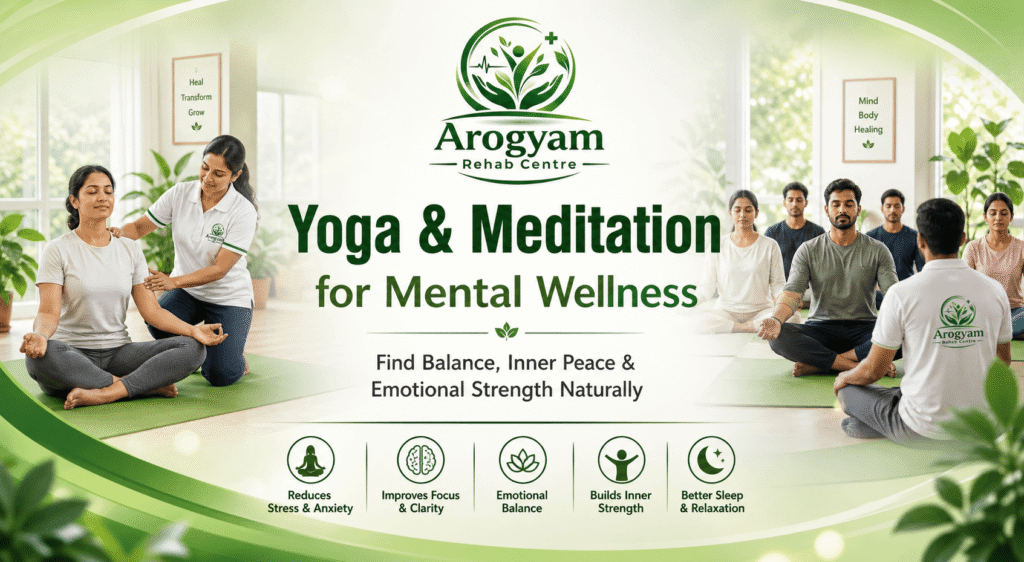
In today’s fast-paced world, mental health challenges like stress, anxiety, burnout, and emotional imbalance have become increasingly common. While therapy and medical treatments play a crucial role, many people are turning toward holistic approaches for long-term mental wellness. Among the most powerful and time-tested methods are yoga and meditation.
These ancient practices are not just physical exercises or relaxation techniques—they are complete mind-body systems designed to create balance, clarity, and inner peace. Whether someone is recovering from addiction, dealing with emotional struggles, or simply seeking a healthier lifestyle, yoga and meditation can be life-changing tools.
Understanding Mental Wellness
Mental wellness is more than the absence of illness. It includes:
- Emotional balance
- Stress management
- Positive thinking
- Self-awareness
- Healthy coping mechanisms
When mental wellness is disturbed, it can affect relationships, productivity, physical health, and overall quality of life. This is where yoga and meditation offer a natural, sustainable path to healing.
Just Read : Motivational Enhancement Therapy (MET): Building the Inner Drive for Lasting Recovery
What is Yoga?
Yoga is an ancient practice that originated in India thousands of years ago. It combines:
- Physical postures (Asanas)
- Breathing techniques (Pranayama)
- Meditation and mindfulness
The goal of yoga is to create harmony between the body, mind, and soul.
How Yoga Supports Mental Wellness
Yoga works on both physical and psychological levels:
1. Reduces Stress
Yoga lowers cortisol (stress hormone) levels, helping the body relax naturally.
2. Improves Mood
Regular practice increases the production of serotonin, the “feel-good” hormone.
3. Enhances Self-Awareness
Yoga encourages mindfulness, helping individuals understand their thoughts and emotions better.
4. Promotes Better Sleep
Many yoga techniques calm the nervous system, leading to improved sleep patterns.
5. Supports Emotional Healing
Yoga helps release stored emotional tension from the body.
What is Meditation?
Meditation is the practice of focusing the mind and eliminating distractions to achieve a state of calm awareness.
It involves:
- Deep breathing
- Mindfulness
- Observing thoughts without judgment
Benefits of Meditation for Mental Health
1. Reduces Anxiety
Meditation helps calm racing thoughts and reduces overthinking.
2. Improves Focus and Clarity
It trains the brain to stay present and improves concentration.
3. Controls Negative Thinking
Meditation helps break patterns of negative thoughts.
4. Builds Emotional Strength
It increases resilience and emotional stability.
5. Helps in Addiction Recovery
Meditation reduces cravings and improves impulse control.
Yoga & Meditation in Addiction Recovery
In rehabilitation settings, yoga and meditation are often used as complementary therapies.
They help individuals:
- Manage withdrawal symptoms
- Reduce cravings
- Handle triggers and stress
- Build discipline and routine
- Improve emotional control
Recovery is not just physical—it is deeply mental and emotional. Yoga and meditation address this inner healing.
Best Yoga Practices for Mental Wellness
Here are some effective yoga practices:
1. Hatha Yoga
A gentle form ideal for beginners, focusing on basic postures and breathing.
2. Vinyasa Yoga
Flow-based yoga that improves focus and releases stress.
3. Restorative Yoga
Uses props to support the body, promoting deep relaxation.
4. Yin Yoga
Targets deep tissues and helps release emotional tension.
Important Yoga Poses for Mental Health
1. Child’s Pose (Balasana)
Calms the mind and reduces anxiety.
2. Downward Dog (Adho Mukha Svanasana)
Improves blood circulation to the brain.
3. Tree Pose (Vrikshasana)
Enhances focus and balance.
4. Corpse Pose (Savasana)
Deep relaxation and mental clarity.
Breathing Techniques (Pranayama)
Breathing plays a crucial role in mental wellness.
1. Anulom Vilom (Alternate Nostril Breathing)
- Balances the mind
- Reduces anxiety
2. Bhramari (Bee Breathing)
- Calms the nervous system
- Reduces anger and frustration
3. Deep Belly Breathing
- Activates relaxation response
- Improves emotional stability
Types of Meditation for Mental Wellness
1. Mindfulness Meditation
Focuses on being present in the moment.
2. Guided Meditation
Led by a therapist or audio guide.
3. Loving-Kindness Meditation
Encourages compassion and emotional healing.
4. Body Scan Meditation
Increases awareness of physical sensations and stress.
Scientific Benefits of Yoga & Meditation
Research has shown that yoga and meditation:
- Reduce symptoms of anxiety and depression
- Improve brain function and memory
- Lower blood pressure
- Enhance emotional regulation
- Strengthen the immune system
They also positively impact the brain by increasing gray matter in areas responsible for learning, memory, and emotional control.
Daily Routine for Mental Wellness
A simple routine can make a big difference:
Morning:
- 10 minutes of deep breathing
- 15–20 minutes of yoga
Afternoon:
- Short mindfulness break
Evening:
- 10–15 minutes meditation
- Light stretching
Consistency is more important than intensity.
Also Read : Borderline Personality Disorder (BPD): Understanding, Symptoms, Causes & Treatment
Yoga & Meditation in Rehabilitation Centers
Many modern rehab centers integrate yoga and meditation into their treatment programs.
These practices:
- Complement therapy sessions
- Reduce relapse risk
- Improve emotional healing
- Build long-term coping strategies
They create a peaceful environment that supports recovery and self-growth.
Tips for Beginners
Starting yoga and meditation doesn’t have to be complicated.
- Start with 10–15 minutes daily
- Focus on breathing first
- Don’t aim for perfection
- Be consistent
- Choose a quiet, comfortable space
Remember, progress takes time.
Common Challenges and How to Overcome Them
1. Difficulty Concentrating
Start with guided meditation.
2. Lack of Time
Even 5–10 minutes is beneficial.
3. Physical Discomfort
Use props or choose gentle yoga styles.
4. Restlessness
Be patient—calmness improves with practice.
Long-Term Impact on Mental Wellness
With regular practice, yoga and meditation can:
- Create emotional balance
- Improve relationships
- Increase self-confidence
- Reduce dependency on unhealthy coping mechanisms
- Promote a positive outlook on life
They are not quick fixes—but powerful lifelong tools.
FAQs: Yoga & Meditation for Mental Wellness
1. How long does it take to see results from yoga and meditation?
Some benefits like relaxation can be felt immediately, but long-term mental wellness improvements usually take a few weeks of consistent practice.
2. Can yoga replace therapy or medication?
No, yoga is a complementary approach. It should be used alongside professional treatment when needed.
3. Is meditation difficult for beginners?
Not at all. Starting with simple breathing exercises makes it easier.
4. Which is better for mental health: yoga or meditation?
Both are effective. Yoga prepares the body and mind, while meditation enhances mental clarity.
5. Can yoga help with anxiety and depression?
Yes, yoga reduces stress hormones and improves mood, making it highly beneficial.
6. How often should I practice?
Daily practice is ideal, even if it’s just 10–20 minutes.
7. Do I need a trainer to start yoga?
Beginners can start with online guidance, but a trainer helps ensure proper technique.
8. Can meditation help in addiction recovery?
Yes, it reduces cravings, improves self-control, and supports emotional healing.
9. What is the best time for meditation?
Morning is ideal, but it can be practiced anytime.
10. Is yoga suitable for all age groups?
Yes, yoga can be adapted for all ages and fitness levels.
11. Can yoga improve sleep?
Yes, it relaxes the nervous system and promotes better sleep quality.
12. How do I stay consistent with practice?
Start small, set a routine, and focus on how it makes you feel rather than perfection.
Conclusion
Yoga and meditation are more than wellness trends—they are proven, powerful tools for achieving mental clarity, emotional balance, and inner peace. In a world filled with stress and distractions, these practices offer a natural way to reconnect with oneself.
Whether someone is dealing with anxiety, recovering from addiction, or simply seeking a healthier lifestyle, incorporating yoga and meditation into daily life can lead to profound and lasting transformation. To know more.. visit: Arogyam Rehab