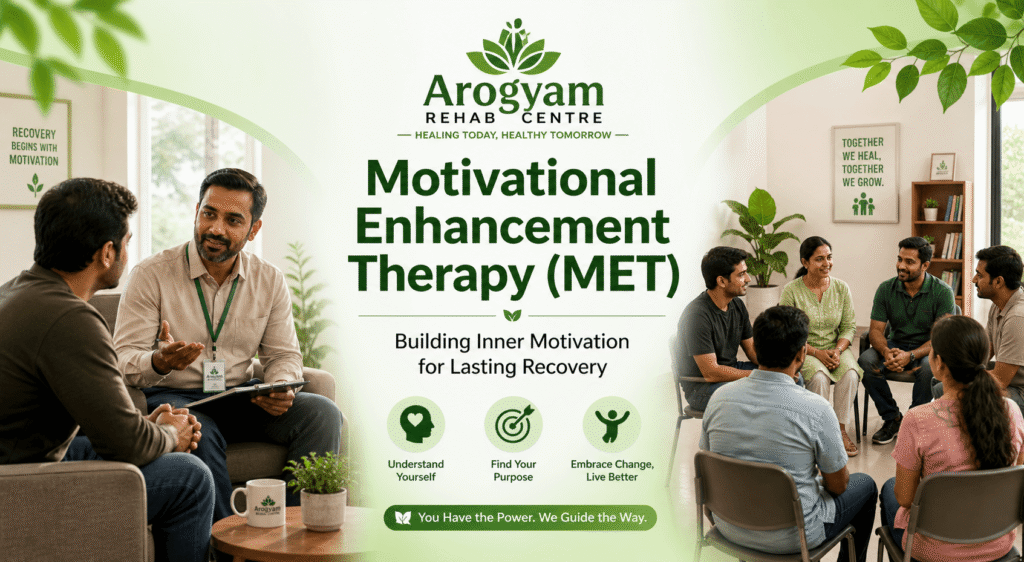
Recovery from addiction is not just about stopping substance use—it’s about finding the inner motivation to change. Many individuals struggling with addiction already know they need help, but they feel stuck, confused, or unsure about taking the next step. This is where Motivational Enhancement Therapy (MET) becomes a powerful tool.
Motivational Enhancement Therapy is a client-centered, evidence-based counseling approach that helps individuals strengthen their own desire and commitment to change. Instead of forcing decisions or giving lectures, MET gently guides a person to discover their own reasons for recovery.
In this article, we’ll explore how MET works, its benefits, techniques, and why it plays such a crucial role in addiction recovery.
What is Motivational Enhancement Therapy (MET)?
Motivational Enhancement Therapy (MET) is a structured form of counseling designed to increase a person’s motivation to overcome addiction. It is based on the principles of motivational interviewing, focusing on empathy, collaboration, and self-empowerment.
Unlike traditional therapies that may involve long-term sessions, MET is typically short-term (4–6 sessions) but highly impactful.
The goal is simple:
👉 Help individuals move from “I’m not sure I want to change” to “I’m ready to take action.”
Why Motivation Matters in Addiction Recovery
Addiction often creates a cycle of denial, guilt, and fear. Many people feel:
- Conflicted about quitting
- Afraid of withdrawal or failure
- Unsure about life without substances
- Pressured by family but not personally ready
Without motivation, even the best treatment programs can fail.
MET works by addressing this ambivalence (mixed feelings) and helping individuals:
- Understand the consequences of addiction
- Recognize personal values
- Build confidence in their ability to change
Core Principles of MET
Motivational Enhancement Therapy is built on a few key principles that make it unique and effective.
1. Expressing Empathy
Therapists create a safe, non-judgmental environment where individuals feel heard and understood.
2. Developing Discrepancy
The therapist helps the person see the gap between:
- Their current behavior (addiction)
- Their goals and values (health, family, career)
This realization often sparks internal motivation.
3. Avoiding Confrontation
MET does not involve arguments or pressure. Instead, it encourages open conversation.
4. Supporting Self-Efficacy
Clients are reminded that change is possible and that they have the strength to achieve it.
How MET Works: Step-by-Step Process
Motivational Enhancement Therapy follows a structured yet flexible approach.
1. Initial Assessment
The therapist evaluates:
- Substance use patterns
- Emotional state
- Readiness to change
2. Personalized Feedback
Clients receive clear, non-judgmental feedback about:
- Health risks
- Impact on relationships
- Behavioral patterns
3. Exploring Ambivalence
The therapist helps the individual talk through:
- Pros and cons of addiction
- Fears about quitting
- Personal goals
4. Strengthening Commitment
Once motivation builds, the therapist helps:
- Set realistic goals
- Develop a change plan
- Prepare for challenges
Techniques Used in MET
MET uses practical communication techniques that feel natural and supportive.
Open-Ended Questions
Encourage deeper thinking:
- “What do you feel is holding you back from change?”
Affirmations
Build confidence:
- “You’ve already taken an important step by seeking help.”
Reflective Listening
Shows understanding:
- “It sounds like part of you wants to quit, but another part is unsure.”
Summarizing
Helps clarity:
- “So, you want a healthier life but are worried about withdrawal.”
Benefits of Motivational Enhancement Therapy
MET offers several powerful benefits, especially in early recovery.
1. Increases Willingness to Change
It helps individuals move from denial to action.
2. Reduces Resistance
Because it avoids pressure, clients feel more open and cooperative.
3. Builds Confidence
People begin to believe in their ability to recover.
4. Works Quickly
Even a few sessions can create meaningful progress.
5. Complements Other Therapies
MET is often used alongside:
Who Can Benefit from MET?
Motivational Enhancement Therapy is suitable for:
- Individuals unsure about quitting addiction
- People in early stages of recovery
- Those who have relapsed before
- Individuals resistant to traditional therapy
- Young adults struggling with substance use
It is especially effective for addictions such as:
- Alcohol dependency
- Drug addiction
- Nicotine addiction
MET in a Nasha Mukti Kendra
In a professional rehab setting, MET is often one of the first therapies introduced.
At a Nasha Mukti Kendra, MET helps:
- Break denial and resistance
- Prepare clients for deeper therapy
- Encourage participation in treatment programs
- Build trust between therapist and patient
It acts as a foundation for long-term recovery.
MET vs Other Therapies
| Therapy Type | Focus | Approach |
|---|---|---|
| MET | Motivation | Short-term, client-centered |
| CBT | Behavior change | Thought restructuring |
| Group Therapy | Peer support | Shared experiences |
| Detox | Physical recovery | Medical supervision |
MET stands out because it focuses on the “why” behind change, not just the “how.”
Real-Life Impact of MET
Many individuals enter rehab feeling forced or uncertain. Through MET, they begin to:
- Open up about their struggles
- Understand the consequences of addiction
- Develop personal reasons to recover
- Take ownership of their journey
This internal shift is often the turning point in recovery.
Challenges in MET
While MET is highly effective, it may face some challenges:
- Some individuals take time to open up
- Deep denial may slow progress
- Requires skilled therapists for best results
However, with patience and consistency, these challenges can be overcome.
Tips to Get the Most Out of MET
If you or a loved one is undergoing MET, these tips can help:
- Be honest during sessions
- Keep an open mind
- Reflect on your goals regularly
- Trust the process
- Stay consistent with therapy
Conclusion
Motivational Enhancement Therapy is not about forcing change—it’s about inspiring it from within.
By helping individuals understand their own reasons for recovery, MET builds a strong emotional and psychological foundation for lasting change.
In addiction recovery, motivation is everything. And sometimes, all it takes is the right guidance to turn hesitation into determination.
Frequently Asked Questions (FAQs)
1. What is Motivational Enhancement Therapy used for?
MET is used to help individuals build motivation to overcome addiction and commit to recovery.
2. How long does MET take?
It is usually a short-term therapy lasting around 4 to 6 sessions.
3. Is MET effective for addiction treatment?
Yes, MET is evidence-based and highly effective, especially in early recovery stages.
4. Can MET be combined with other therapies?
Absolutely. MET is often combined with CBT, group therapy, and medical detox programs.
5. Is MET suitable for everyone?
It works best for individuals who feel unsure or resistant about change.
6. What makes MET different from other therapies?
MET focuses on building internal motivation rather than giving direct advice or instructions.
7. Does MET involve medication?
No, it is a counseling-based therapy, but it can be used alongside medical treatment.
8. Can MET prevent relapse?
Yes, by strengthening motivation and commitment, it helps reduce the chances of relapse.
9. Is MET used in rehab centers?
Yes, it is commonly used in Nasha Mukti Kendras as part of a comprehensive treatment plan.
10. How do I know if MET is right for me?
If you feel unsure about quitting or need help finding motivation, MET can be very helpful.